In Kayanza, the important line is not only altitude or scenery. It is the route ripe cherry takes from many small plots to a station where the next decisions are made together.
01 / HILLSIDE
Coffee begins across many small plots.
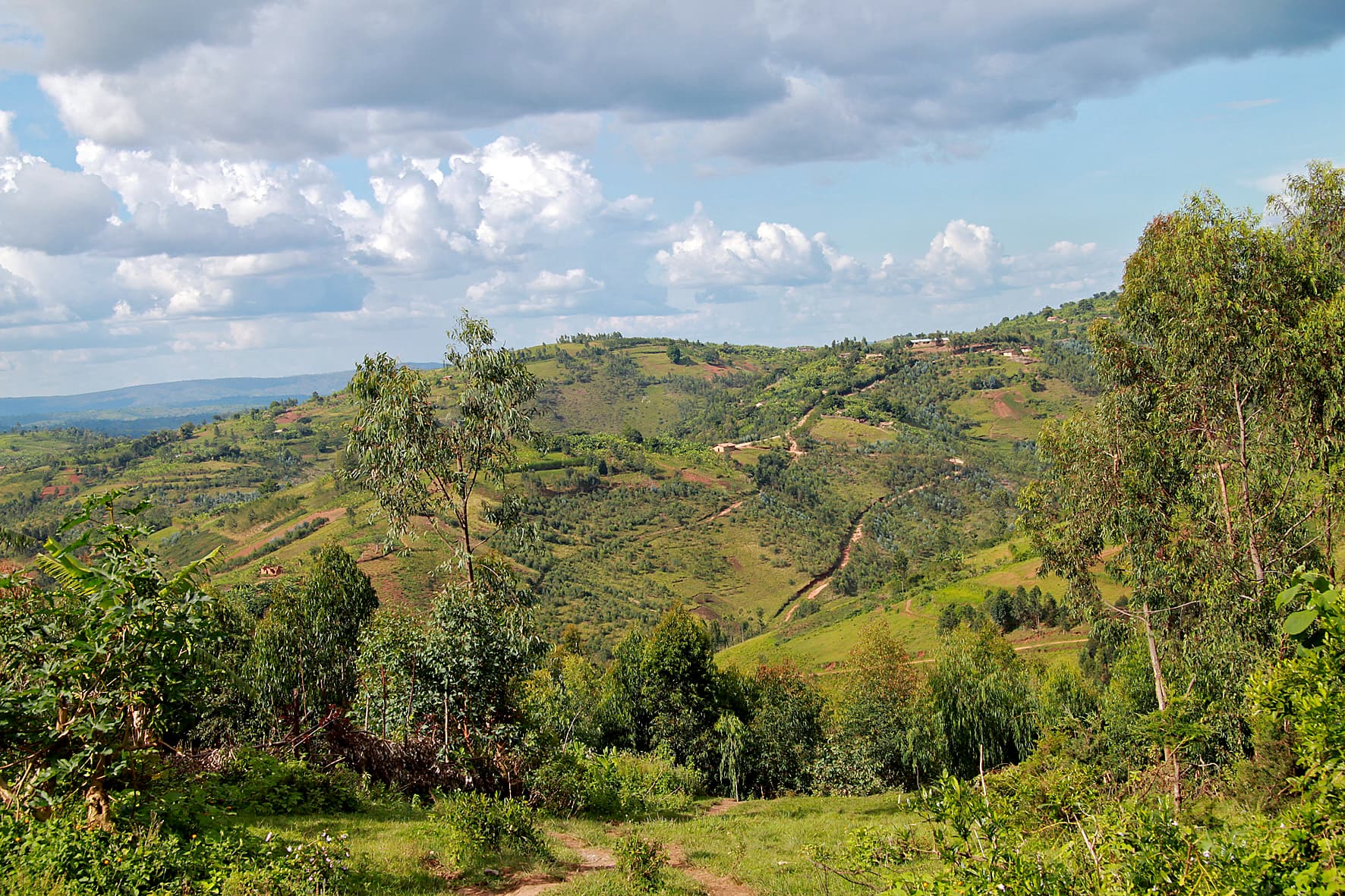
Kayanza is often introduced through altitude and steep green hills. The landscape matters, but not as a postcard. Slopes shape paths, plot size, erosion risk, and the effort required to move a perishable fruit after picking. Coffee cherry cannot wait indefinitely for the view to be admired.
World Bank reporting on Burundi describes a sector built largely on small holdings, often with relatively few trees per household. The exact figures change and should not be turned into a portrait of every farmer. The durable point is structural: much of the harvest is dispersed across many growers rather than concentrated on one large estate.
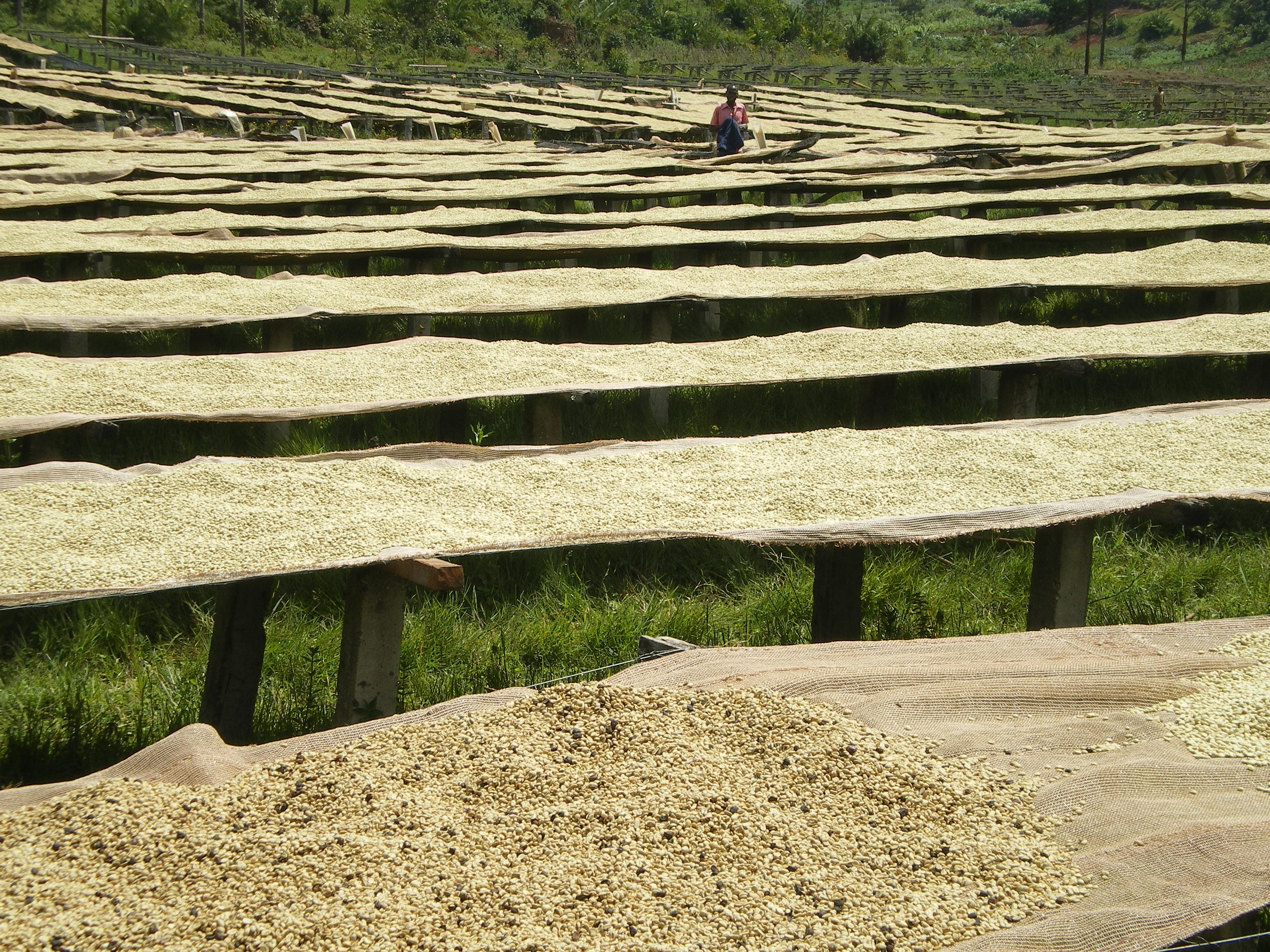
That structure makes the journey to a washing station important. A producer delivers cherry, not export-ready green coffee. The station becomes the place where many small harvests meet receiving standards, pulpers, tanks or demucilaging equipment, washing channels, drying surfaces, storage, and records.
02 / FROM CHERRY TO STATION
Distance is part of quality control.
A ripe cherry continues to change after it leaves the tree. Heat, delay, damage, and mixed maturity can make later processing harder to control. A station that is reachable from surrounding hills can shorten the time between picking and receiving, although road conditions, harvest volume, and daily capacity still shape what is possible.
At intake, teams can inspect or sort deliveries before pulping. The station may keep batches separate by delivery, day, hill, quality, or another operating need. It may also combine coffee from many growers. “Washing-station coffee” therefore does not automatically mean one farm or one producer. It describes a shared point in the chain.
Burundi’s modern coffee system has a long association with washing stations. World Bank records describe extensive investment in fully washed processing and stations from the 1980s onward. That history helps explain why the station is so visible in accounts of Burundian coffee today, while also reminding us that infrastructure, ownership, and performance can change over time.
03 / THE STATION SEQUENCE
Shared equipment does not remove judgment.
In a fully washed sequence, ripe cherry can be pre-sorted, depulped, fermented or mechanically demucilaged, washed, graded, and moved into drying. Each verb contains choices. A pulper must be adjusted. Fermentation must be monitored. Water and channels can help separate material, but operators still decide what proceeds and what is removed.
The station also has limits. Processing capacity is finite. Water must be managed. Fruit and wastewater need responsible handling. Rain changes the drying day. A batch arriving at the wrong time or in poor condition cannot be made uniform by equipment alone.
This is why the station is better understood as a working system than as a machine. Its quality depends on people receiving cherry, operating equipment, cleaning surfaces, moving parchment, checking moisture, sorting defects, and keeping different stages from becoming confused.
04 / BOURBON CONTEXT
A familiar family name still needs verification.
Bourbon is widely associated with Arabica production in Burundi. Official sector documents describe it as common, and individual Kayanza station records often use Bourbon or “mainly Bourbon” in their lot information. The name is useful, but it should remain attached to evidence for a specific coffee rather than applied automatically to an entire country.
Bourbon itself is not one fixed sensory result. Plant health, local selection, growing conditions, harvest maturity, and every post-harvest stage continue to matter. Even where Bourbon is confirmed, the word identifies plant lineage more than it predicts red fruit, sweetness, florality, or body.
For a reader, that distinction is practical. Treat variety as one field on the label. If it is missing, do not assume it. If it is present, read it beside the region, station or producer information, process, harvest details, and the roaster’s actual description of the cup.
05 / RAISED BEDS
Drying is an active stage of production.
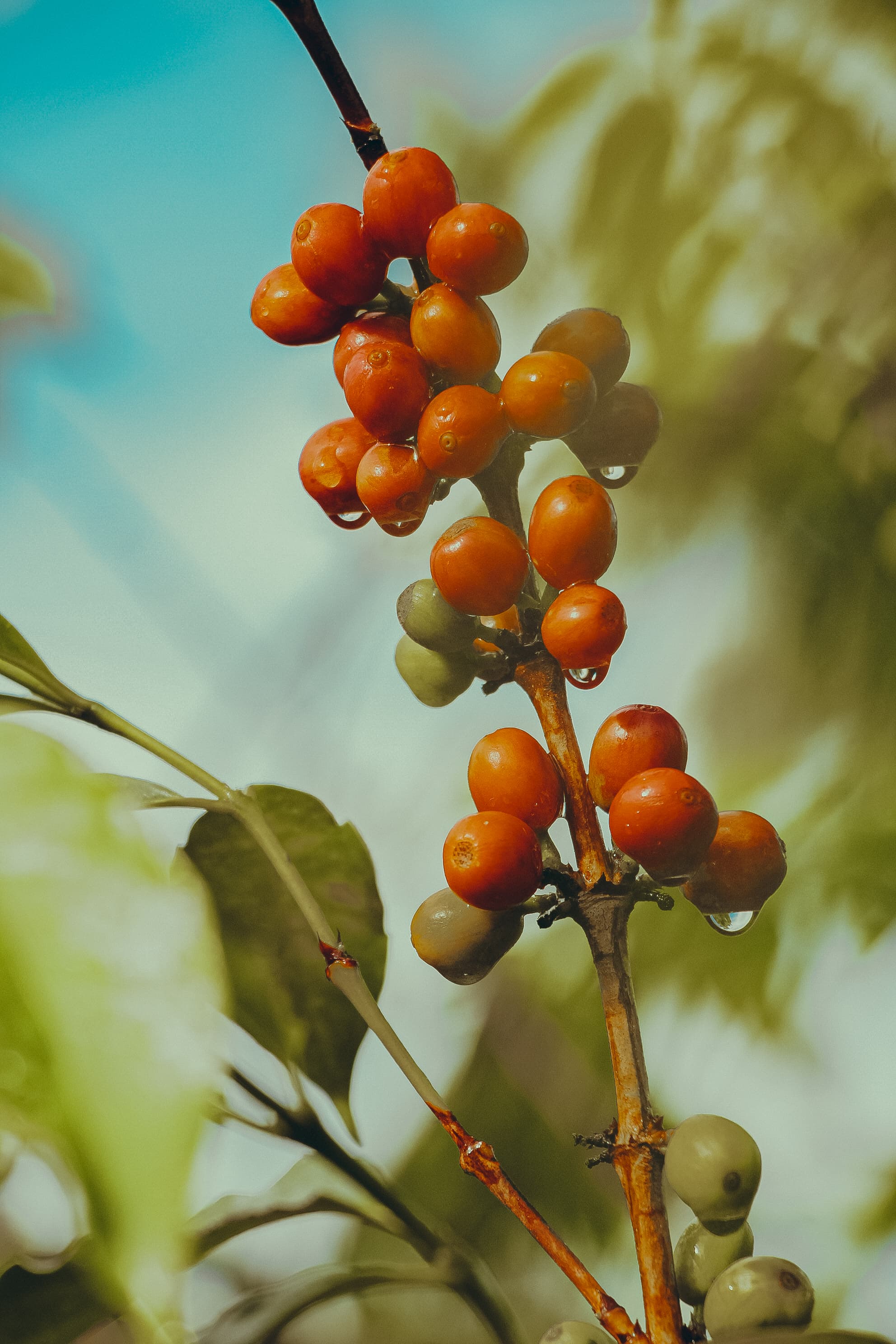
Raised beds—often called African beds in coffee trade language—hold coffee above the ground on a mesh or perforated surface. Air can move around the coffee, workers can reach it from both sides, and lots can be spread in controlled layers. These are advantages, not guarantees.
Coffee still needs to be turned so moisture leaves evenly. Thick layers can trap heat and slow drying. Thin layers can respond quickly to sun and wind. Rain, cool nights, intense midday heat, and changing humidity can require the coffee to be covered, moved, or gathered. Workers remove visible defects as the coffee dries and monitor when it is ready to leave the bed.
Records from individual Kayanza stations document combinations of channel grading, hand sorting, and sun-drying on raised beds. That evidence supports raised beds as a real part of the region’s specialty-coffee work. It does not mean every station uses the same bed, timing, layer depth, or routine.
The bed is therefore best read as a working surface. Its geometry makes the labor visible: rows of coffee, repeated turning, separation between lots, and a long exposure to weather that must be managed rather than ignored.
06 / TWO PROCESS DIRECTIONS
Washed and natural begin with different conditions.
In washed processing, the skin and most mucilage are removed before the parchment coffee is dried. In natural processing, the whole cherry dries around the seed before the dried fruit is hulled away. Fermentation takes place in both routes, but it happens in different environments and over different spans of the process.
Natural processing places more of the drying burden on the intact fruit. The cherry must lose moisture evenly while the seed remains inside it. Turning, sorting, and protection from unwanted mold or uncontrolled fermentation become especially important. Washed coffee has its own risks and controls, including water quality, tank hygiene, mucilage removal, and the condition of wet parchment entering the beds.
Neither is the serious process and neither is the easy one. They are different production routes. A careful natural can be clean and precise; a poorly managed washed coffee can show defects. The process name tells you the broad arrangement of fruit removal and drying, not the quality of its execution.
07 / PROCESS IS NOT DESTINY
The same hills can produce more than one cup direction.
Post-harvest processing can influence green coffee chemistry and the sensory experience after roasting. Research also shows why simple rules fail: microbial communities, fruit condition, fermentation environment, drying, genetics, and agricultural conditions interact. “Natural equals fruit” and “washed equals floral” are useful only until they become shortcuts that hide the coffee in front of us.
Place is not destiny either. Kayanza contains many hills, growers, deliveries, stations, and seasons. A regional name creates a meaningful boundary for comparison, but it cannot promise one taste. The more honest use of place is to narrow the question: which part of Kayanza, which coffee, which process, which harvest, and which description from the roaster?
08 / READING RED CLAY
Two Kayanza coffees make the comparison visible.
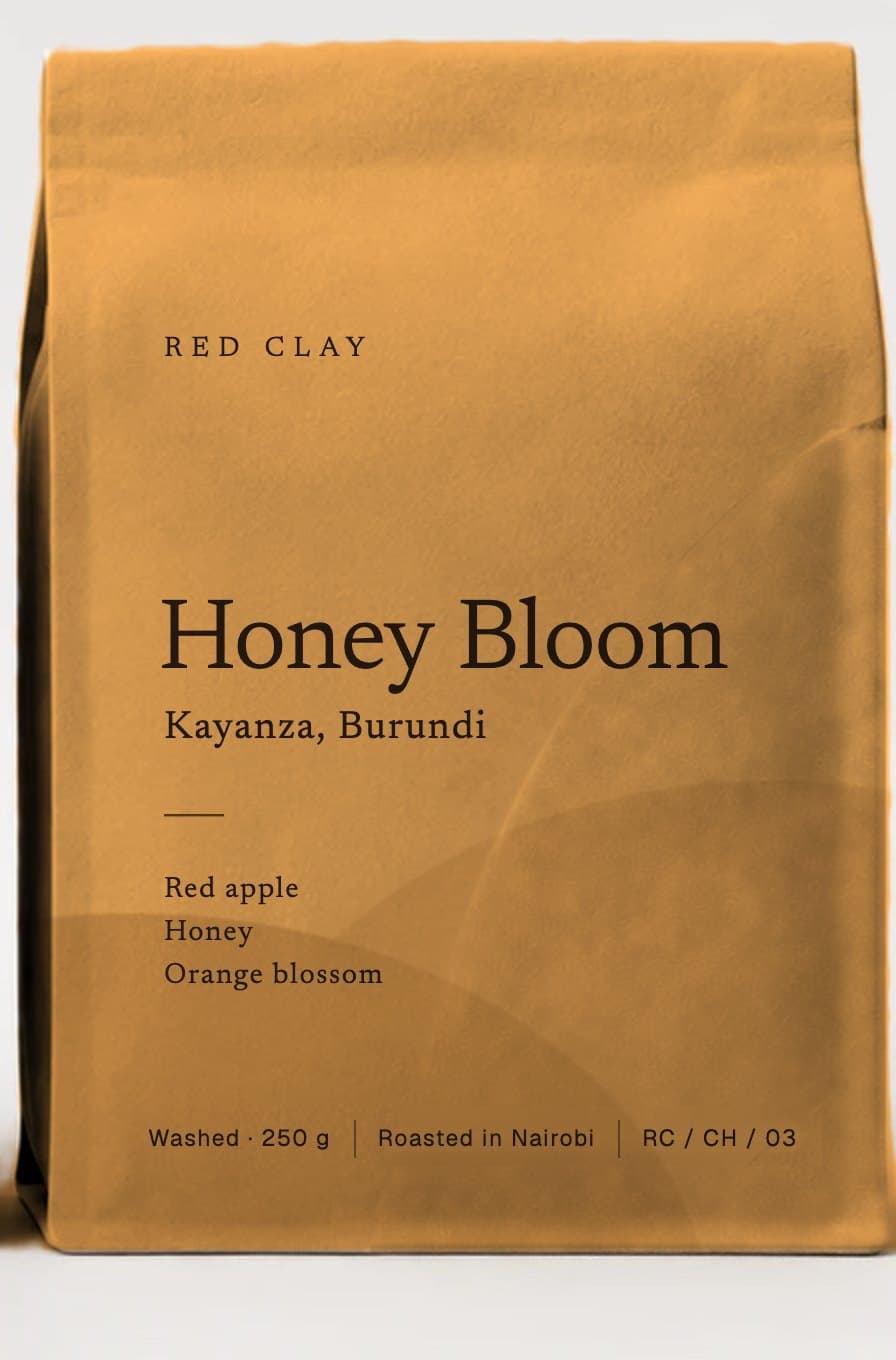
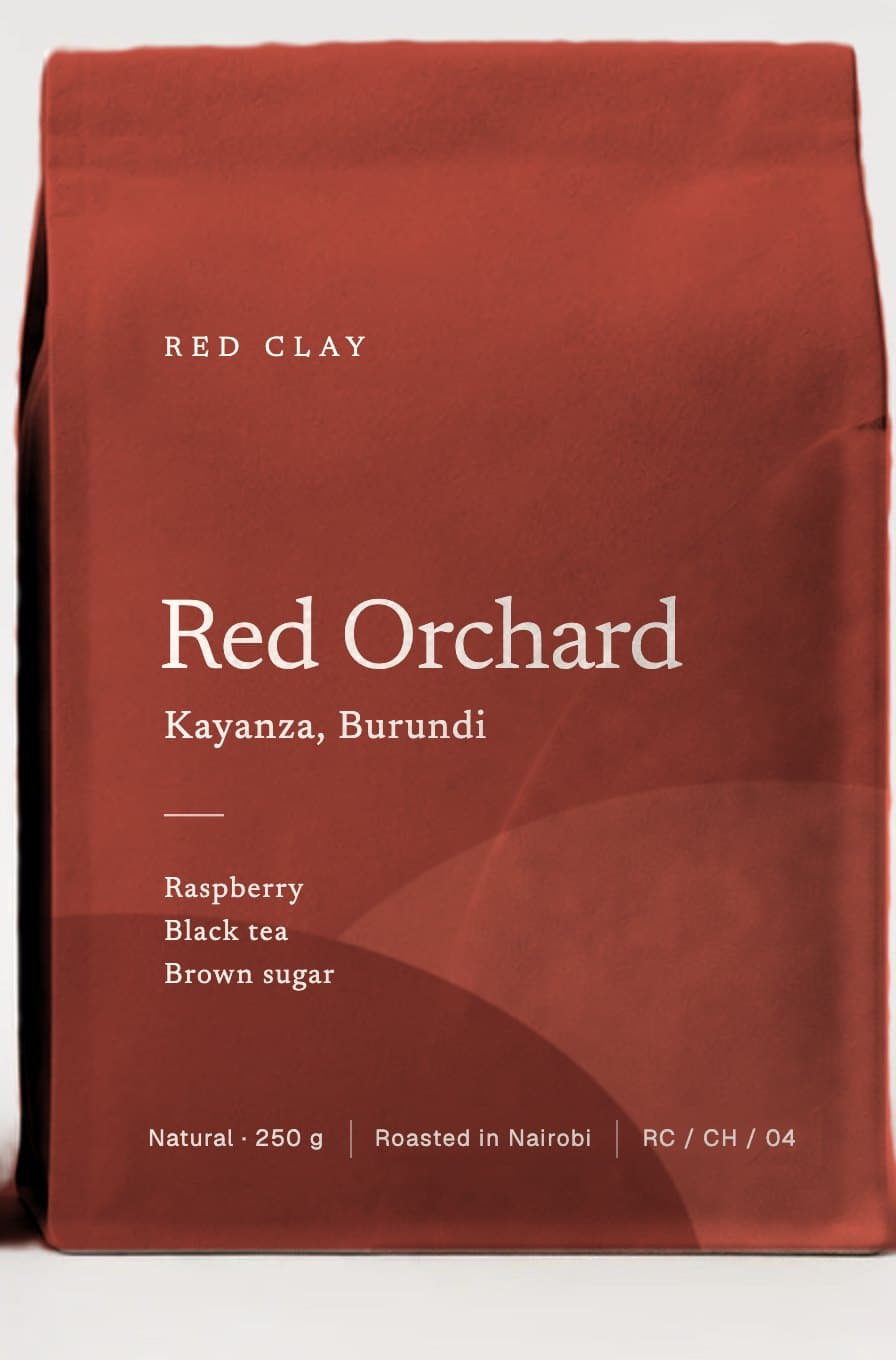
Honey Bloom is Red Clay’s softer, more floral Kayanza reading: red apple, honey, and orange blossom. Red Orchard turns toward raspberry, black tea, and brown-sugar depth. The profiles are designed to help a visitor choose, not to claim that every washed or natural coffee from the region follows the same pattern.
Taste them as a pair and the useful questions become easier to hold. What stayed constant? What changed? Region is shared at a broad level. Process direction changes. The intended cup changes too. Everything else—from specific plant material to daily station practice—would need its own evidence before it could complete the explanation.