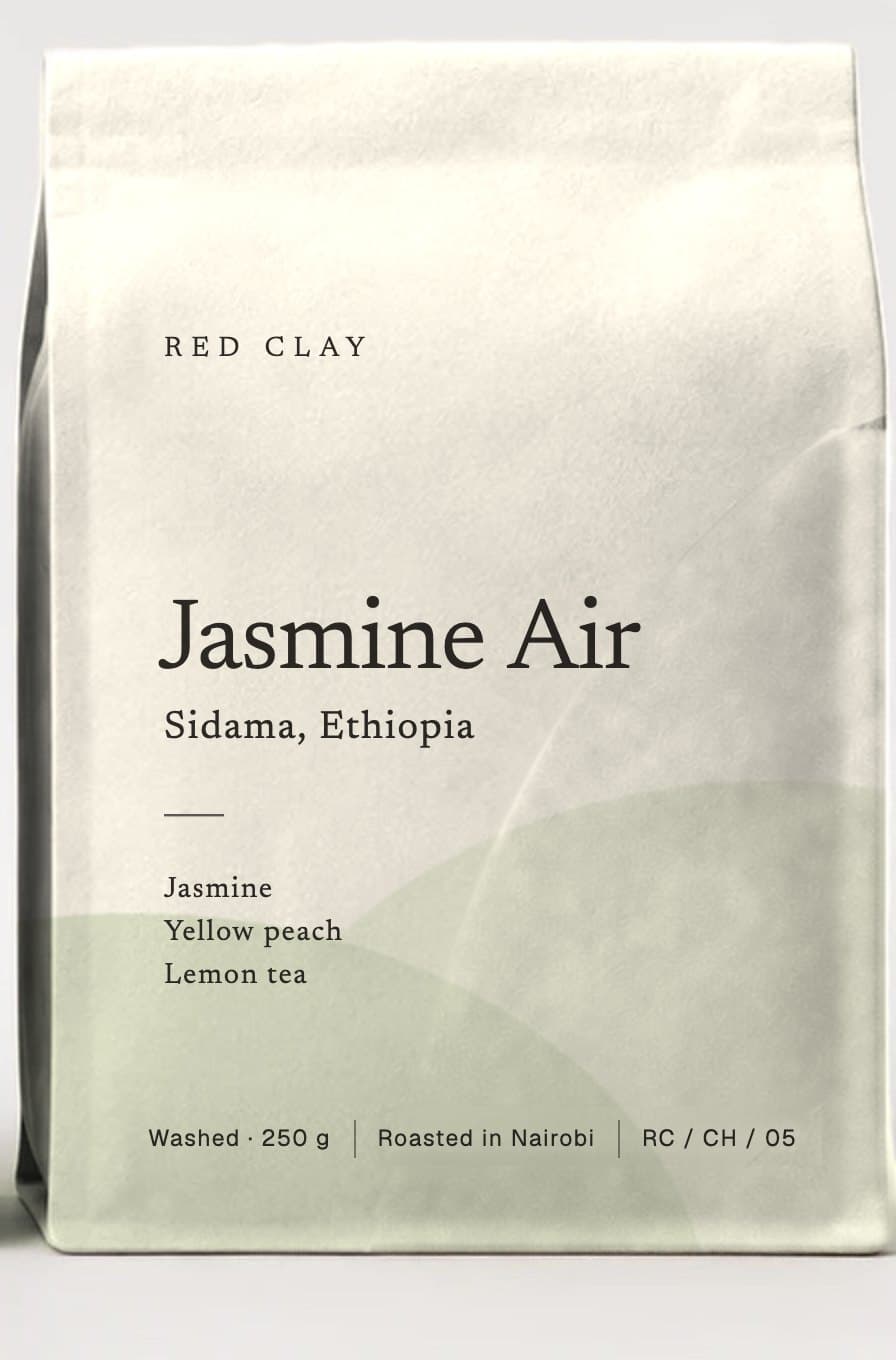
- Region
- Sidama, Ethiopia
- Process
- Washed
- Varieties
- Ethiopian landrace selections
- Notes
- Jasmine / yellow peach / lemon tea
- Price
- KES 2,100
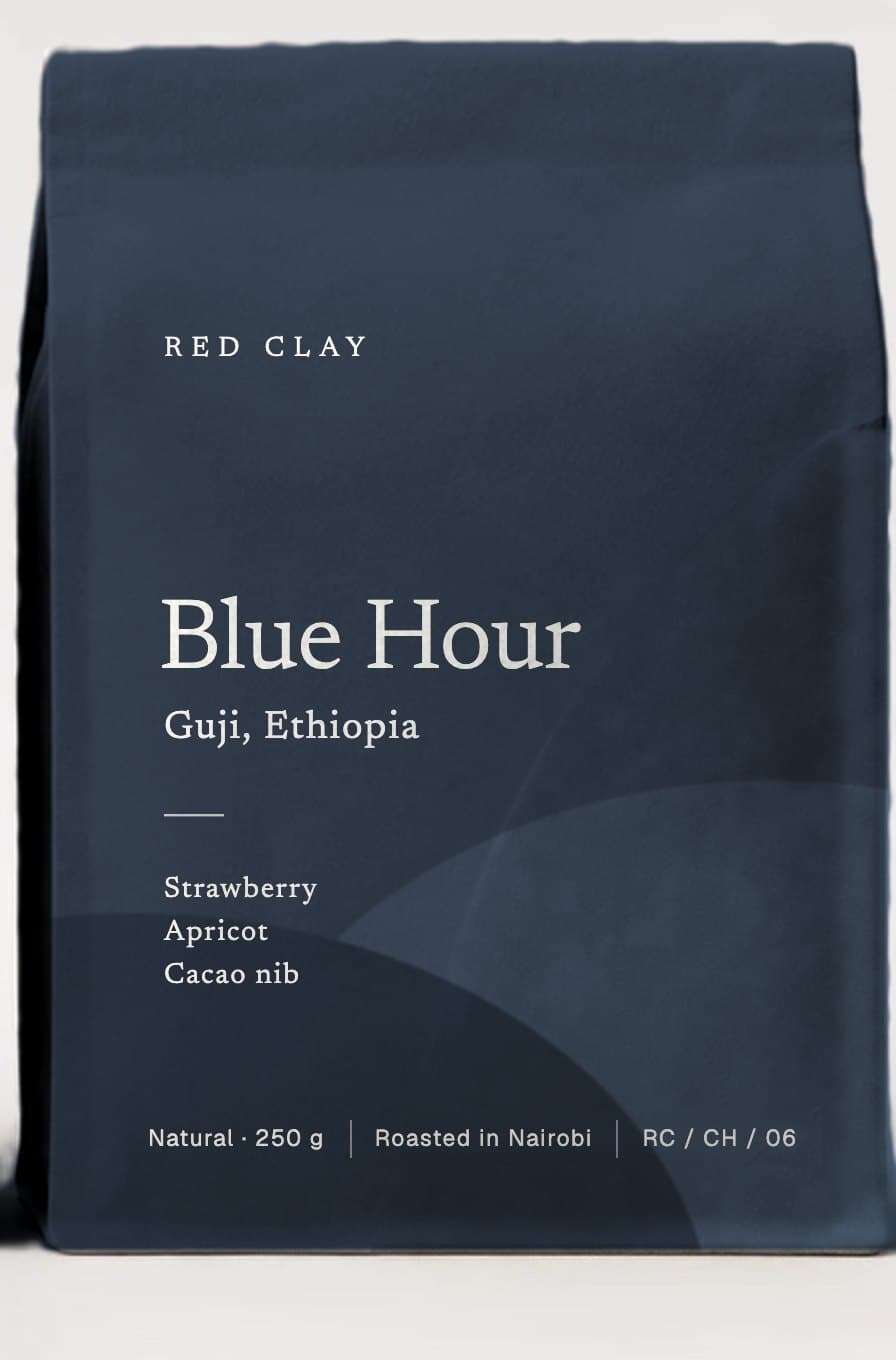
Two places, two processes, and no single shorthand.
Sidama and Guji offer two entries into southern Ethiopia’s coffee diversity. Their names locate a coffee; they do not assign it a universal flavor.
Before the bean
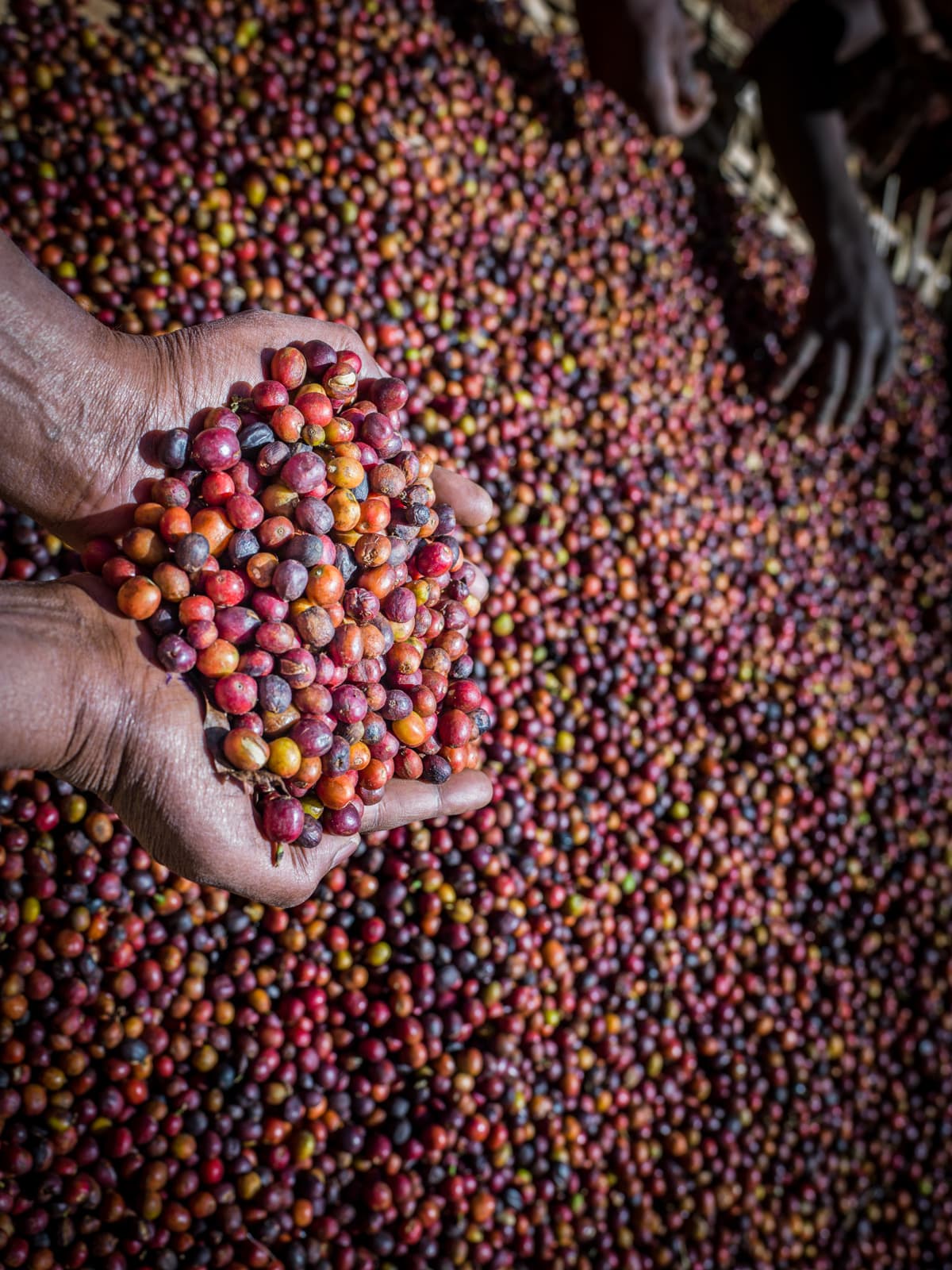
A coffee cherry has an outer skin and pulp, a sticky layer called mucilage, a papery parchment layer, a thin silver skin and usually two seeds. Washed processing removes the skin and most mucilage before the seed is dried in parchment. Natural processing dries the seed inside the whole fruit before hulling. Those different conditions matter, but so do plant genetics, ripeness, fermentation management, drying, storage, roasting, and brewing.
Specimen comparison
Beneath the word
Ethiopia is a primary center of diversity for Coffea arabica. Its coffee includes forest and semi-forest populations, farmer-maintained landraces, local selections, and varieties released through research programs. “Heirloom” cannot name all of that accurately, and even “landrace” should not be used for every Ethiopian coffee by default.
Read Edition 03 · Beyond “Heirloom”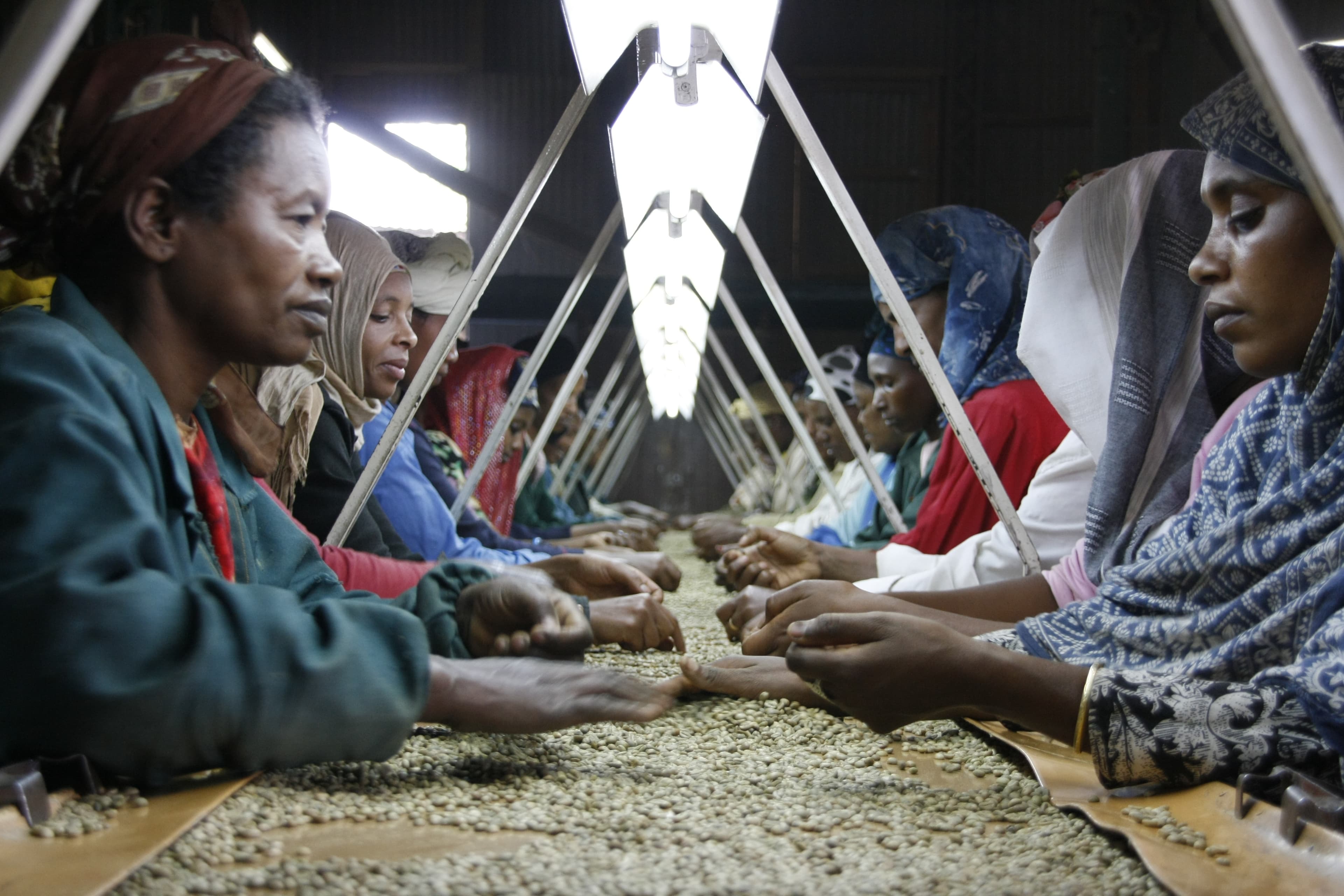
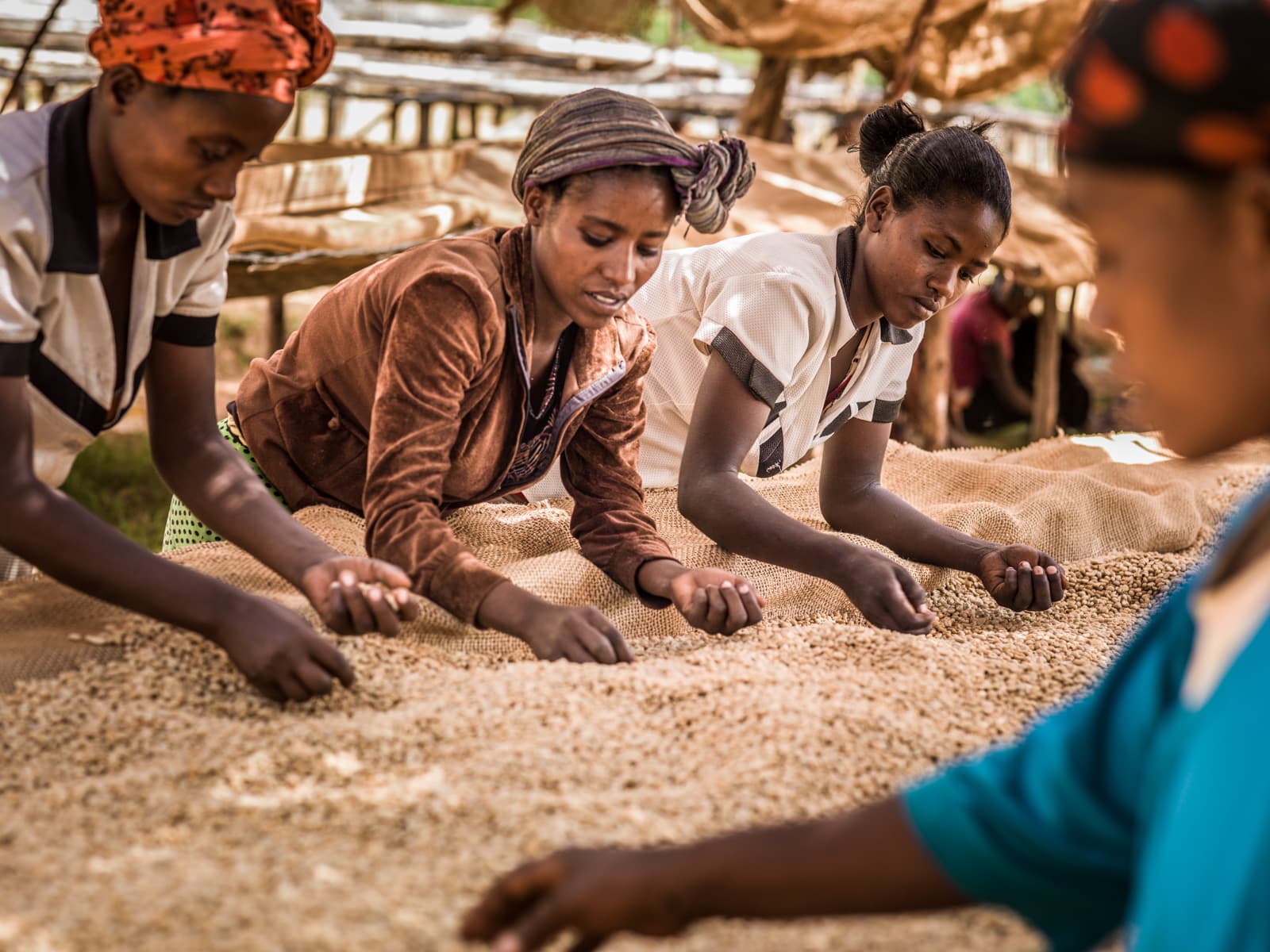
The work
Sorting makes quality decisions visible. Workers separate coffee by ripeness, density, size, or visible defect at different points in the chain. The work can happen before and after drying, and it depends on people knowing which differences matter at each stage.
Use each label for the job it can do.
Edition 03 · Related readingBeyond “Heirloom”Look beyond a convenient bag label to the landraces, local selections, research varieties, and geographic detail underneath it.Read the Edition